The SE 1st Street Improvements Project stands as a major step forward in shaping a safer, more connected future for East Vancouver, Washington. Spanning nearly a mile from SE 177th Avenue to SE 192nd Avenue, this federally funded project transforms a once constrained corridor into a modern, multimodal transportation route that better serves a growing community.
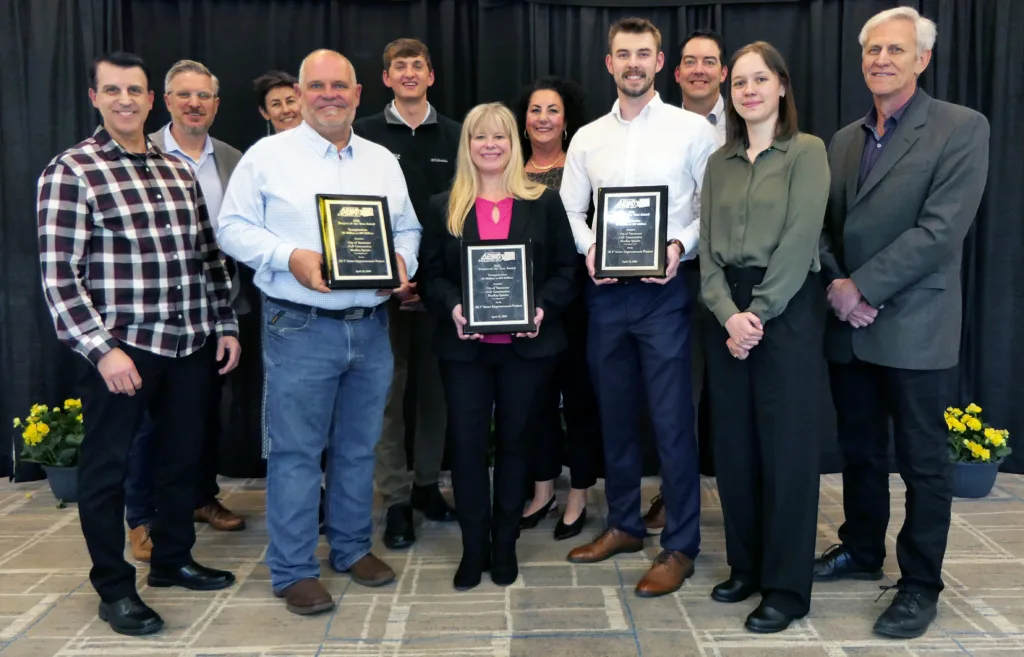
Recognized as a 2026 American Public Works Association (APWA) Washington Chapter’s Project of the Year, this effort reflects a strong partnership between the City of Vancouver, private developers, and the project team to deliver meaningful infrastructure improvements that will serve the region for decades.
From Safety Concerns to Complete Street
Before construction, SE 1st Street lacked essential pedestrian and bicycle infrastructure. Narrow lanes, roadside hazards, and limited connectivity created safety challenges for residents, especially students and families traveling through the corridor.
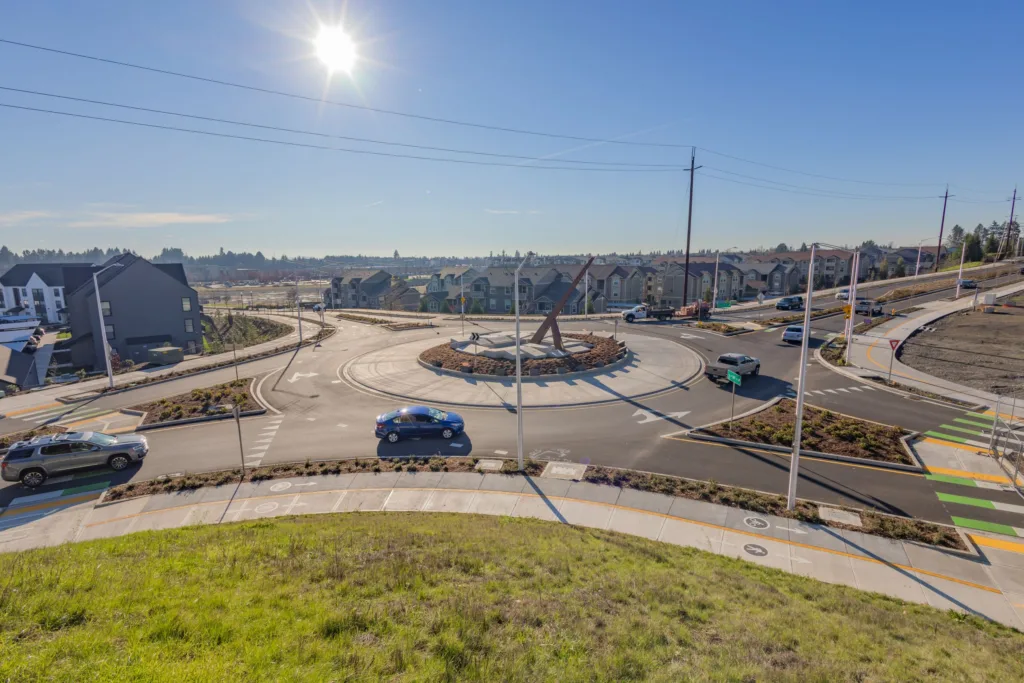
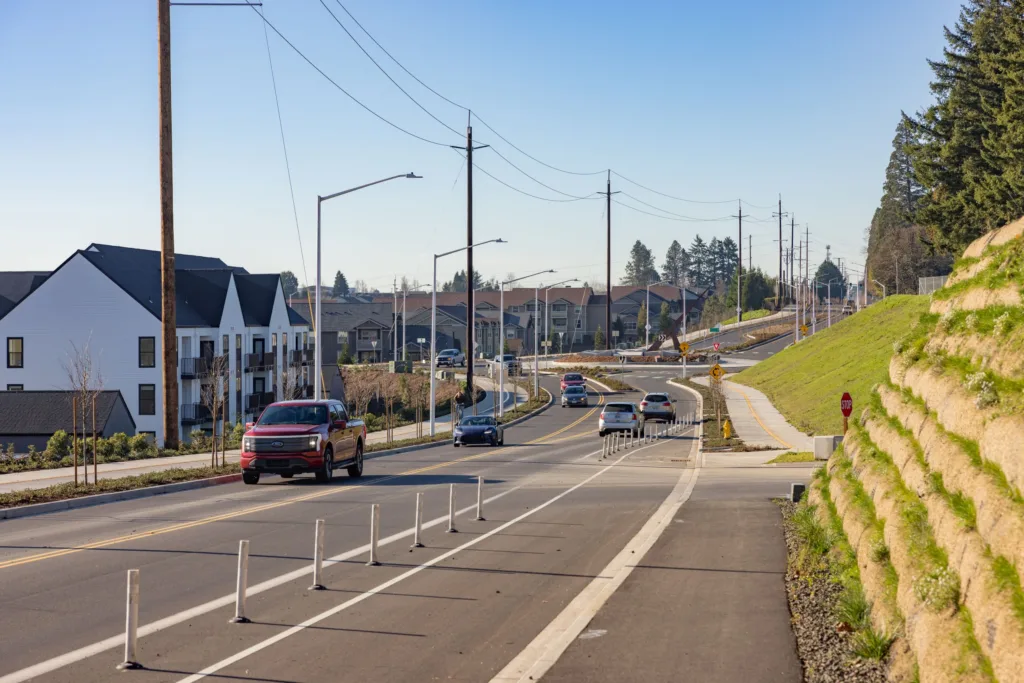
Today, the corridor has been reimagined as a complete urban street. Improvements include widened pavement, sidewalks, curbs, separated bike lanes, modern street lighting, stormwater drainage systems, and updated signage and striping. These upgrades significantly improve visibility, safety, and accessibility for all users.
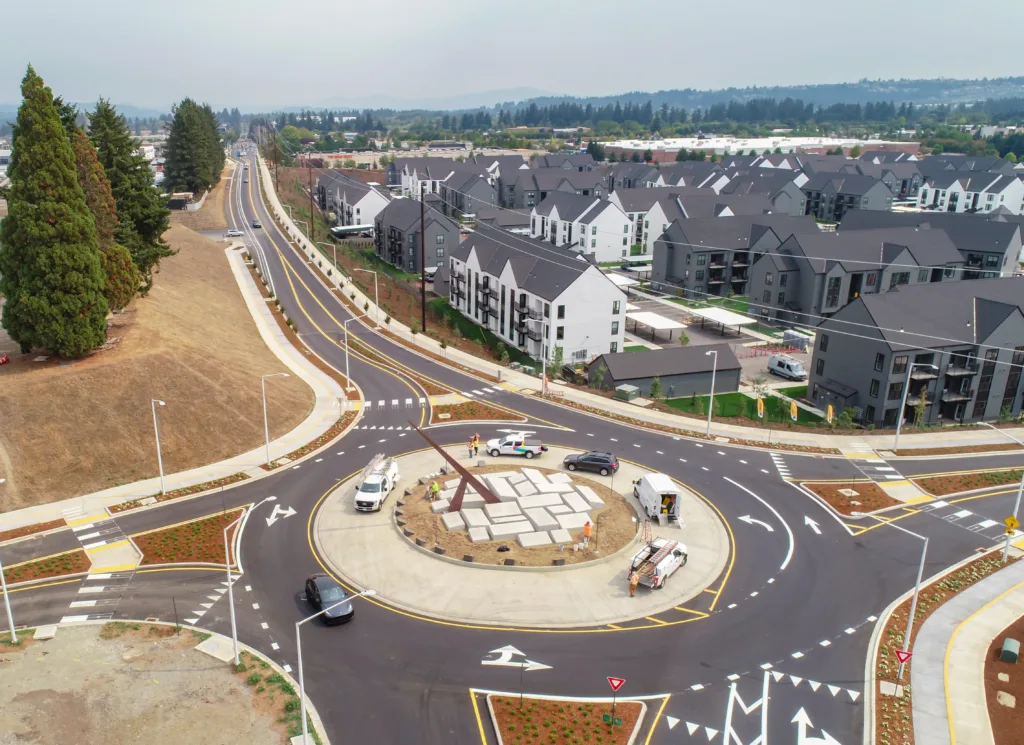
New sidewalks and protected bike facilities create safer routes for walking and cycling, while enhanced roadway width and lighting improve conditions for drivers. A new roundabout at SE 184th Avenue and a traffic signal at SE 190th Avenue further support safe and efficient access to nearby residential, commercial, and industrial areas.
A Phased and Innovative Delivery Approach
The project was delivered in two phases. Phase 1, completed in 2023, focused on retrofitting SE 1st Street between SE 164th Avenue and SE 177th Avenue within established neighborhoods.
Phase 2, extending from SE 177th Avenue to SE 192nd Avenue, introduced a hybrid public and private delivery model. Through a developer agreement, private development interests were integrated with publicly funded infrastructure improvements. This approach allowed the project to move forward efficiently while aligning with ongoing growth in the area.
The roadway reopened to traffic in October 2025, with full completion scheduled for May 2026. Early planning for the corridor began in 2012, underscoring the long-term vision behind this transformation.
Prioritizing Community Safety and Connectivity
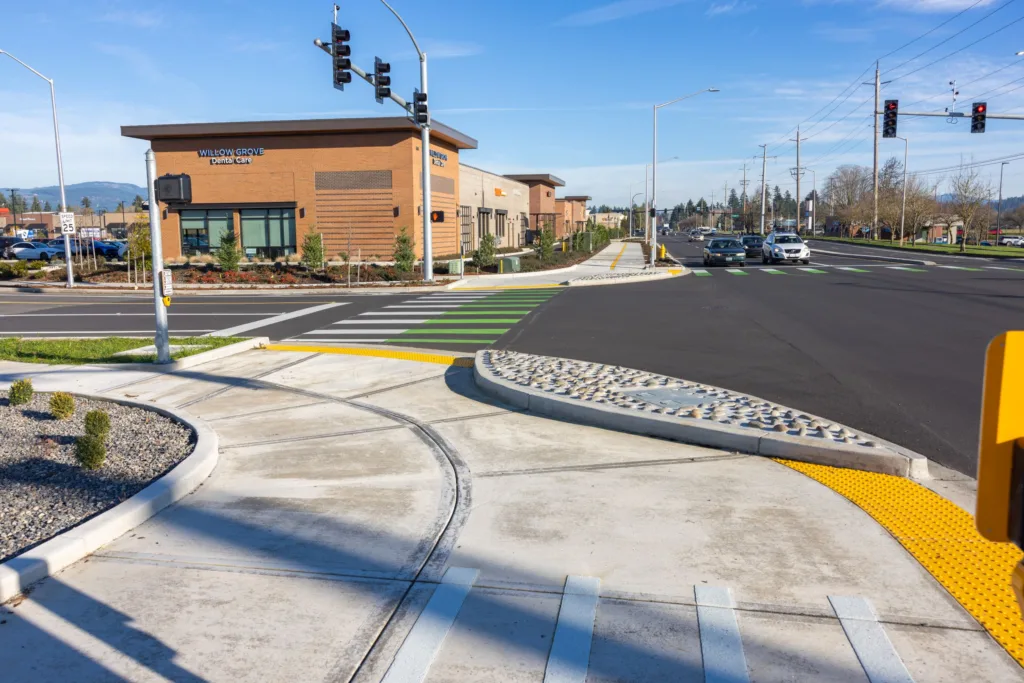
A defining outcome of the project is its focus on safety and livability. Wider travel lanes, separated pedestrian and bicycle facilities, ADA-compliant crossings, and improved lighting all work together to reduce conflict points and enhance visibility.
The roundabout at SE 184th Avenue plays a key role in improving safety by lowering vehicle speeds and eliminating high-risk turning movements. These changes make the corridor safer not only for drivers but also for pedestrians and cyclists of all ages.
The project also strengthens neighborhood connectivity, making it easier and safer for children to travel to nearby schools and for residents to access local destinations without relying solely on vehicles.
Sustainable Design for Long-Term Resilience
Sustainability was a central focus throughout design and construction. The project incorporated low impact development strategies to improve water quality, reduce runoff, and increase long-term resilience.
Stormwater is managed and infiltrated on site, helping protect downstream systems. The use of permeable concrete for bike facilities, reuse of on-site materials, and selection of long-life infrastructure components all contribute to reduced maintenance needs and lower lifecycle costs.
These elements ensure the corridor is not only functional today but adaptable to future growth without requiring significant rework.
A Corridor with Identity
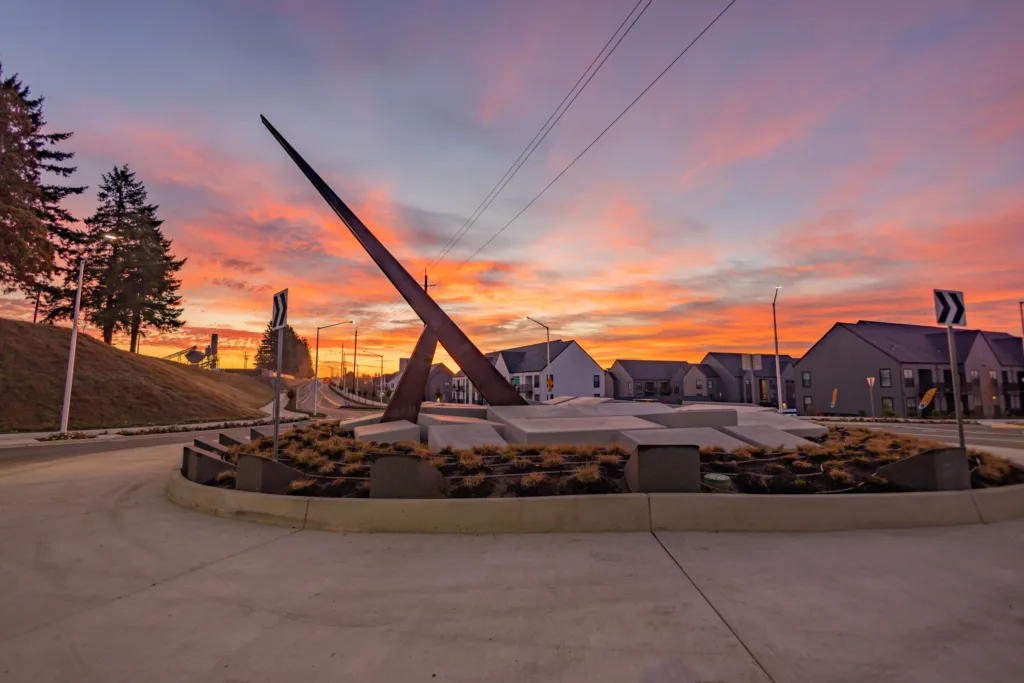
Beyond mobility improvements, the project introduces a unique placemaking feature that sets the corridor apart. At the SE 184th Avenue roundabout, a 28-foot-tall functioning sundial serves as both public art and a gateway element.
Designed using precise latitude and longitude modeling, the sundial reflects thoughtful collaboration between the City, the design team, and private partners. It adds character to the corridor while reinforcing a sense of place for the surrounding community.
Supporting Growth and Future Mobility
The SE 1st Street Improvements Project aligns with the City of Vancouver’s Complete Streets policy by supporting all modes of transportation, including pedestrians, bicyclists, transit users, freight, and motorists.
The upgraded corridor improves reliability and access for daily travel, emergency response, and future development. It has been designed with growth in mind, ensuring the infrastructure can support increasing demand while maintaining safety and performance.
A Model for Modern Infrastructure
This project demonstrates what is possible when thoughtful planning, innovative delivery methods, and community-focused design come together. It balances technical complexity with fiscal responsibility and environmental stewardship, all while addressing the real needs of a rapidly developing area.
By transforming SE 1st Street into a safe, multimodal, and future-ready corridor, the City of Vancouver and its partners have created a model for delivering impactful public infrastructure in growing urban environments.
The result is more than just a roadway. It is a long-term investment in safety, mobility, and quality of life for the community.
MacKay Sposito’s Role
MacKay Sposito played a key role in helping bring this complex, multi-phase project to life. Our team supported the planning and design of corridor improvements, helping to transform SE 1st Street into a complete, multimodal facility that prioritizes safety, accessibility, and long-term performance.
Working closely with the City of Vancouver and project partners, our team helped navigate the challenges of a hybrid public and private delivery model, coordinated with utility providers, and contributed to solutions that balanced technical requirements with community needs. From early design through implementation, we focused on creating a corridor that is both functional and adaptable to future growth.